Let’s be honest: planning can feel like pressure.
We open a new planner, fill out all the boxes with high hopes… and by Wednesday, we’re already off-track, overwhelmed, or discouraged.
I used to think the problem was me. But the truth is — most planning systems don’t leave space for real life, mental health, or the unexpected. That’s why I created a weekly planning routine that actually supports me — not stresses me out.
And today, I’m going to show you how to build one, too.
Why Weekly Planning Works (and Daily Often Doesn’t)
Daily planning can be powerful, but it often feels rigid. You map out every hour, but then something shifts… and you feel like you’ve failed.
A weekly routine, on the other hand, gives you:
- Flexibility
- A wider perspective
- The ability to build in breaks & rest
Think of it as zooming out — you’re guiding the flow of your week, not micromanaging every moment.
Step 1: Reflect on Last Week
Before you start planning, take a moment to look back. You’ll be surprised how grounding it is.
Ask yourself:
- What went well?
- What felt heavy or draining?
- What can I shift, release, or simplify this week?
This reflection sets the tone — and helps you plan from intention, not just urgency.
Step 2: Anchor Your Week With What Matters
Now, think of the core priorities — not just endless tasks.
In your planner, write:
- Top 3 goals for the week
- Non-negotiable (classes, meetings, deadlines)
- One self-care focus (rest, movement, journaling, digital detox)
This helps you stay aligned with what really counts — not just what screams the loudest.
Step 3: Use Gentle Structure — Not Overload
Try organizing your week with soft structure, such as:
Themed Days
- Monday: Admin / emails
- Tuesday–Thursday: Deep focus / study
- Friday: Creative / light tasks
- Weekend: Reset, reflect, recharge
You don’t have to follow it perfectly — it just gives your brain a rhythm to fall into.
Step 4: Leave White Space (aka: buffer zones)
Don’t plan every minute.
Leave empty blocks of time for breathing, recharging, or unexpected shifts. Planning is about feeling supported — not packed.
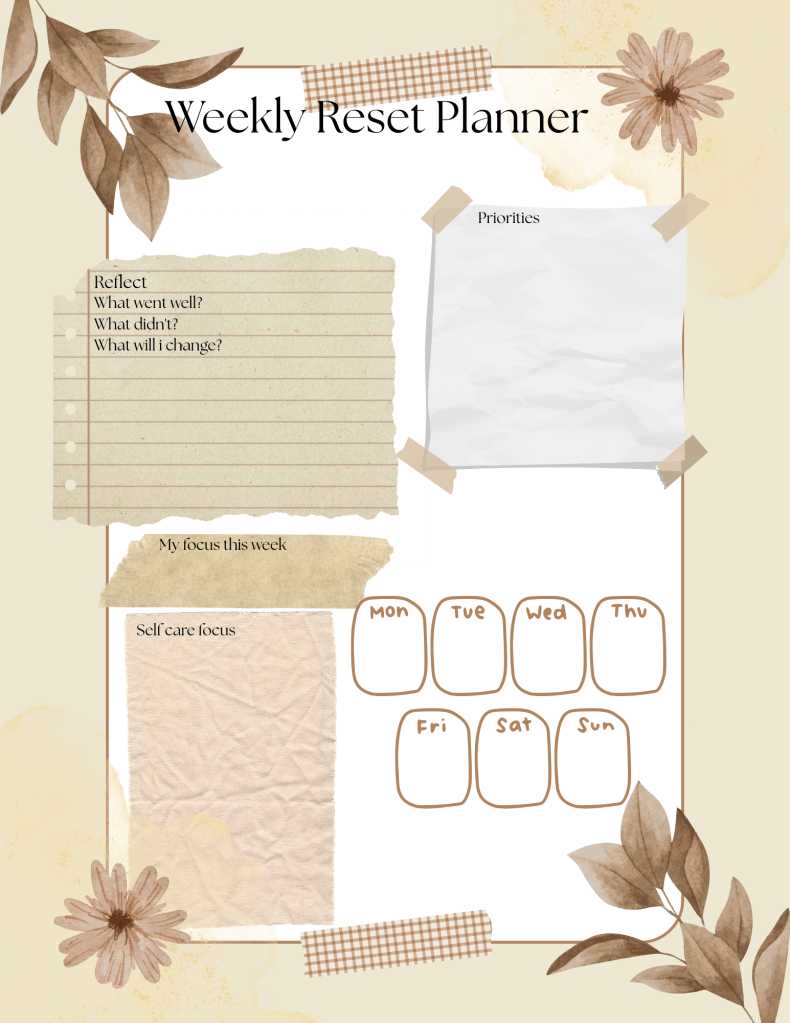
Want a Free Weekly Planner Template?
To help you build your own gentle weekly planning habit, I’ve created a printable Weekly Reset Planner just for you!
It includes:
– Reflection prompts
– Focus areas
– Priorities + rest space
– A calming, minimalist design
You don’t need a perfect plan.
You need a kind one — one that listens to your needs, respects your energy, and evolves with you.
Weekly planning is a ritual, not a rule. Try it, reshape it, and let it work for you.
 MuseWrite
Plaats een reactie